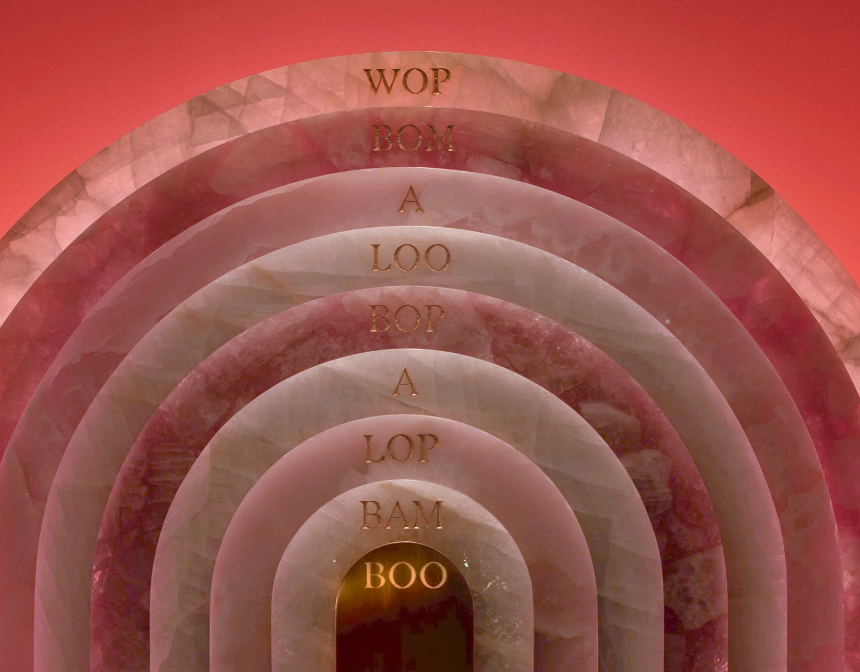
Music City Pillar — Fisk Jubilee Singers
Nashville, Tennessee
Nashville, Tennessee
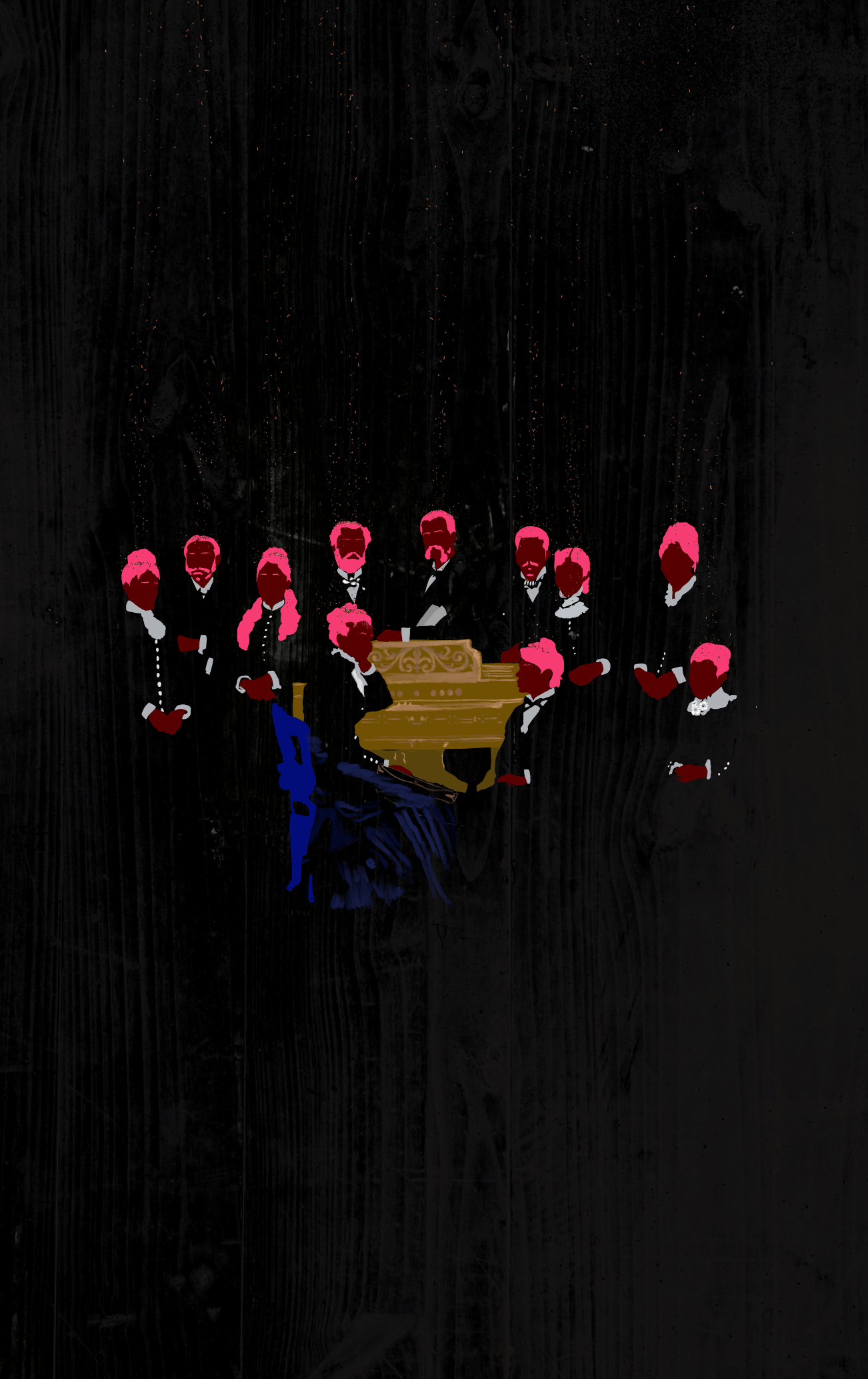
This monument honors the Fisk Jubilee Singers of Nashville, Tennessee — a testament to the resilience of Black people and the enduring power of Black music.
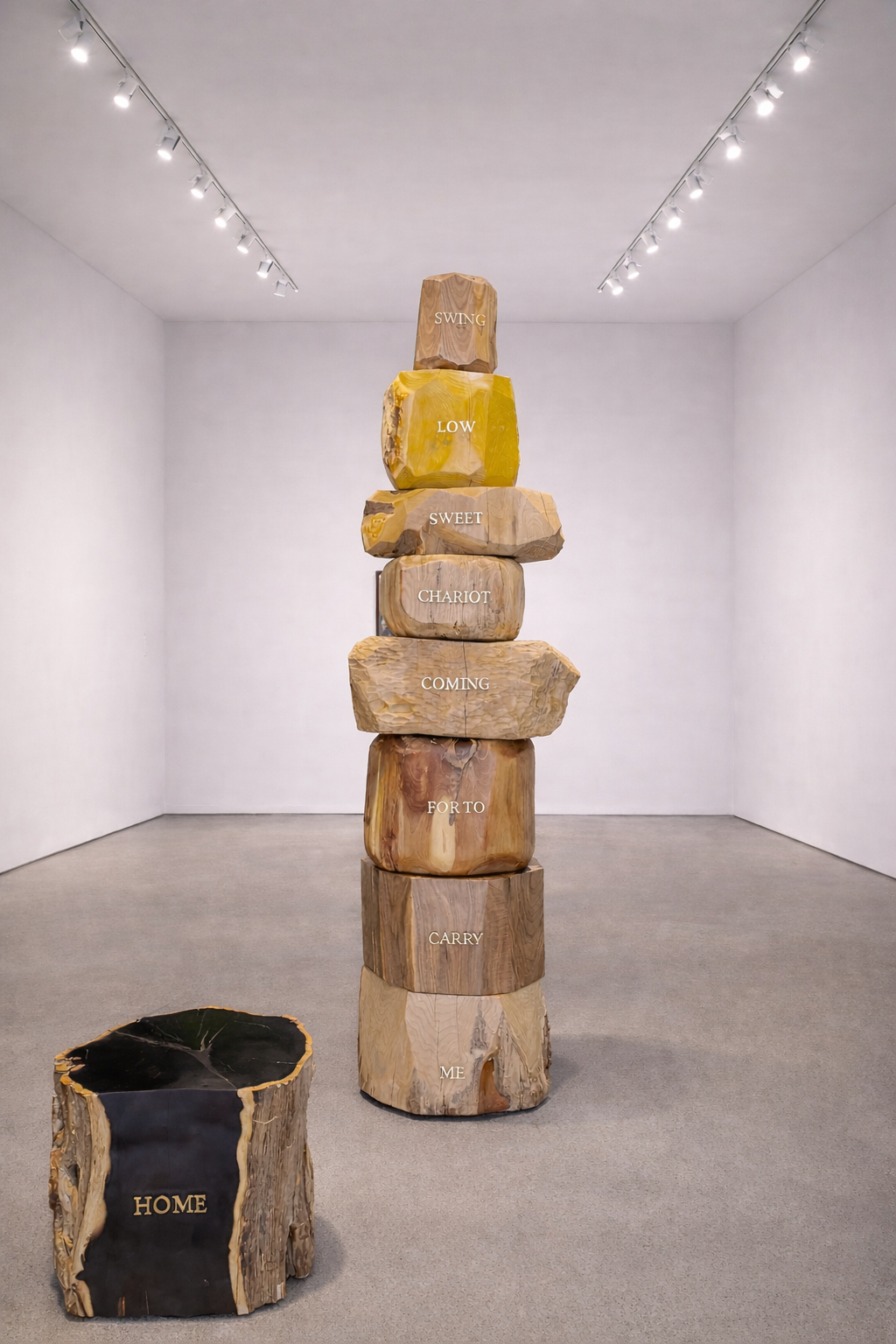
The sculpture is composed of nine hand-carved logs, representing the two quartets and pianist who formed the original student chorus at Fisk University in 1871. At the time, Fisk was educating formerly enslaved people, and the singers began performing traditional spirituals to raise money to house and support students. What began as a practical act of survival soon became something far greater. As the Jubilee Singers traveled the world, their voices introduced audiences across Europe and America to the profound beauty of the Negro spiritual, helping ignite a global appreciation for Black music.
Legend holds that when Queen Victoria of England heard the group perform in 1873, she declared that such remarkable singers must surely come from a “Music City.” From that moment forward, the name became forever attached to Nashville.

Carved into the pillar are the words:
SWING LOW, SWEET CHARIOT
COMING FOR TO CARRY ME HOME
COMING FOR TO CARRY ME HOME
This spiritual, first recorded in 1909, represents one of the earliest preserved recordings of Black music. In the years following emancipation, songs like this were often considered taboo — dismissed as “slave music,” reminders of a painful past. But the Jubilee Singers understood these spirituals differently. For them, the songs were vessels of memory, faith, and endurance — living proof that beauty and strength could emerge even from unimaginable suffering.
The first eight logs are carved from trees native to Tennessee, including sassafras, walnut, cherry, and maple. These woods reflect the materials historically used by Black Tennesseans for healing, shelter, tools, and everyday survival. Each log therefore carries practical, historical, and spiritual meaning rooted in the land itself.
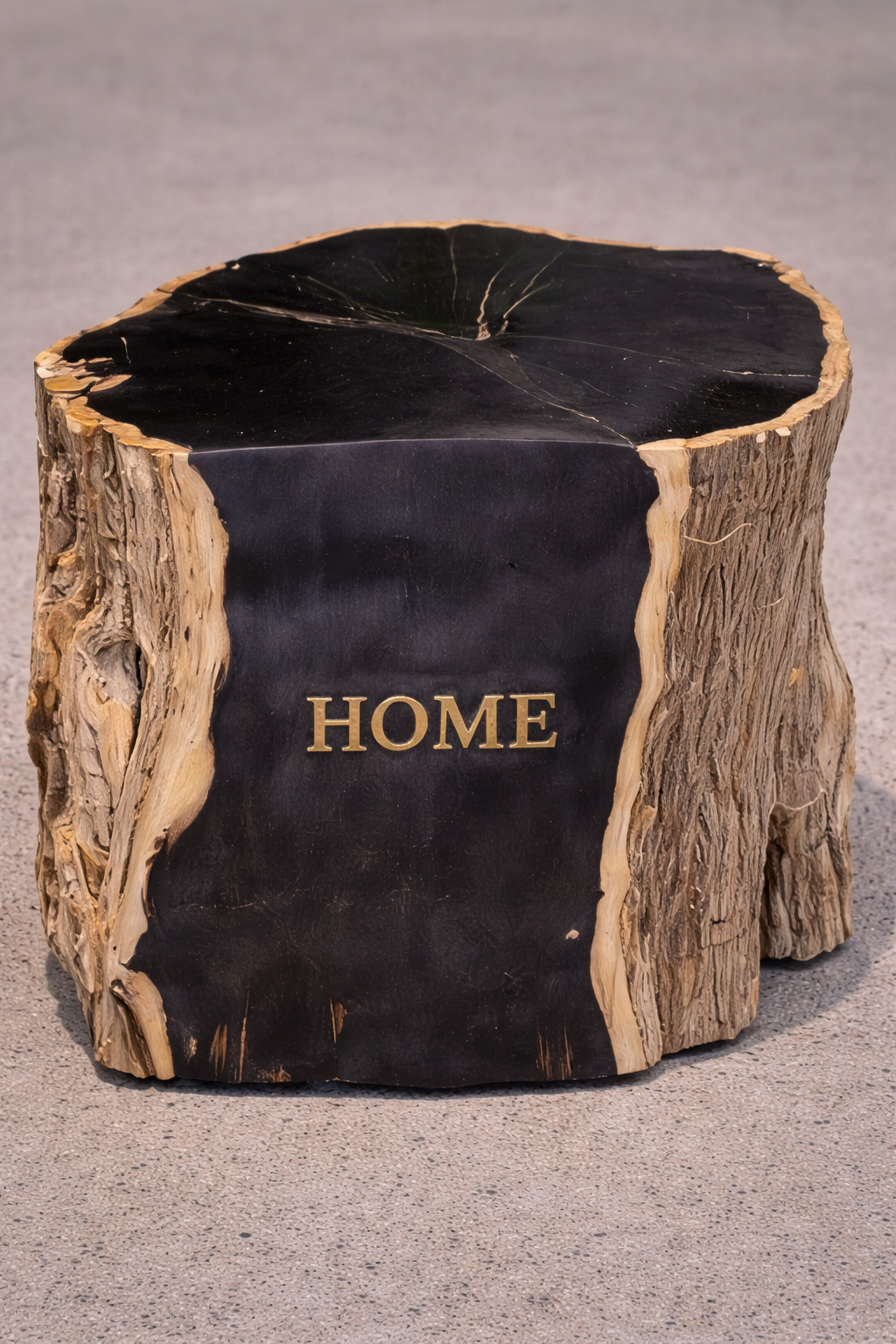
The final log, inscribed with the word HOME, was sourced from Mozambique in Africa — acknowledging both the violent displacement of the transatlantic slave trade and the deeper ancestral origins that existed long before it.
Visitors who approach the monument with reverence are invited to sit upon this final log. In doing so, they enter the circle of the sculpture — joining a quiet moment of reflection with the ancestors whose voices helped shape the sound and spirit of Nashville.