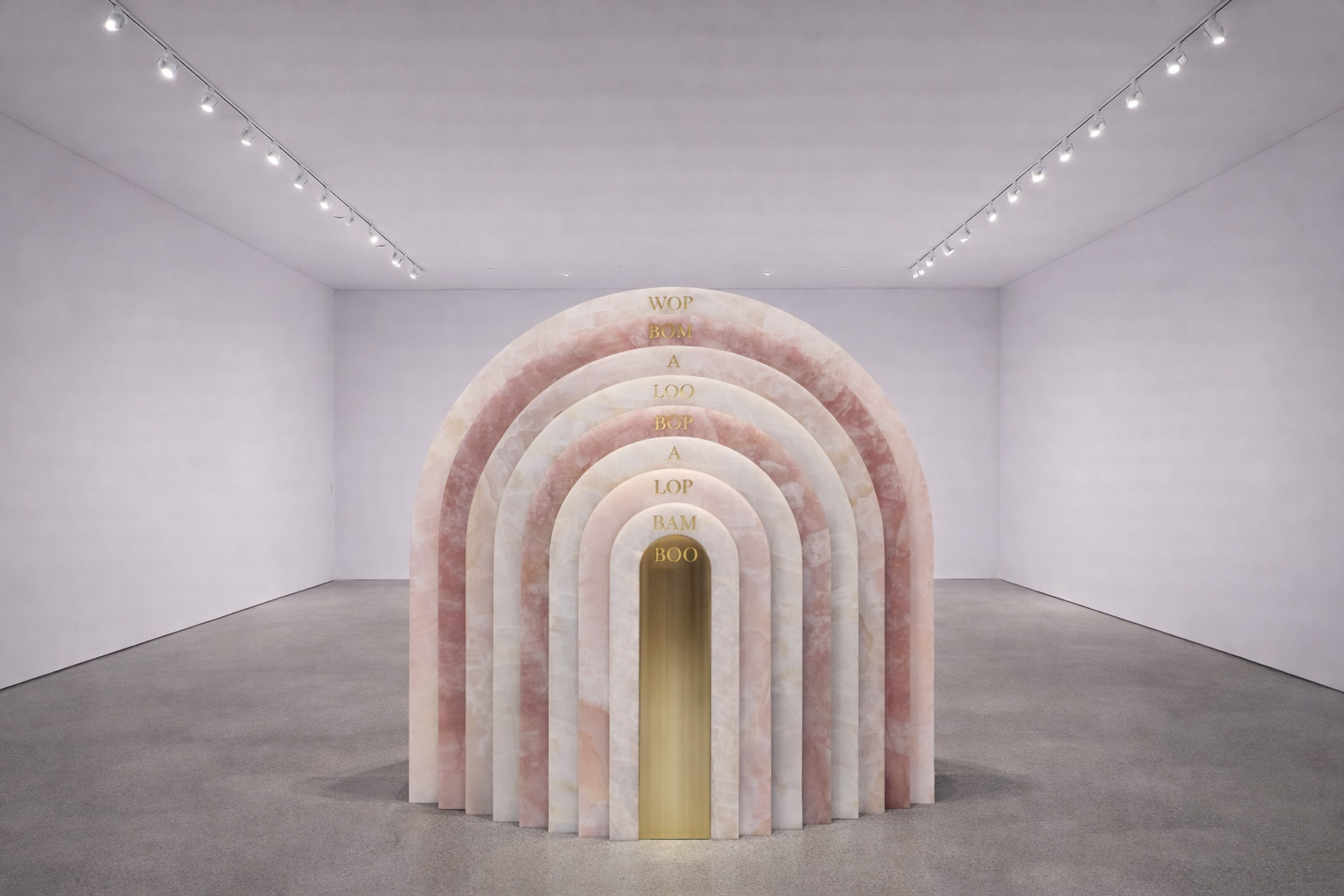
Here stands a monument to the one and only Little Richard Penniman (1932–2020), a piano-pounding, screaming-shouting architect of Rock and Roll. With unmatched charisma and a fearless stage presence, Little Richard shattered musical and cultural boundaries, helping launch the careers of artists from Jimi Hendrix to Mick Jagger and The Beatles. His sound and spectacle carried rock and roll from Southern stages to audiences around the world.
At the height of his career in the 1950s, Little Richard performed with a flamboyant, gender-bending style that challenged the norms of his time. His presence opened space for generations of artists who refused to confine themselves to rigid expectations of identity and performance.The form of the sculpture reflects this disruption. While the adjacent Jubilee Singers’ pillar is stacked vertically, referencing traditional West African and Native American totemic forms, Little Richard’s pillar collapses and splinters the monument itself. The structure lies on its side, fractured and reassembled, echoing the way Little Richard shattered the rules of popular music and rebuilt them in his own image.
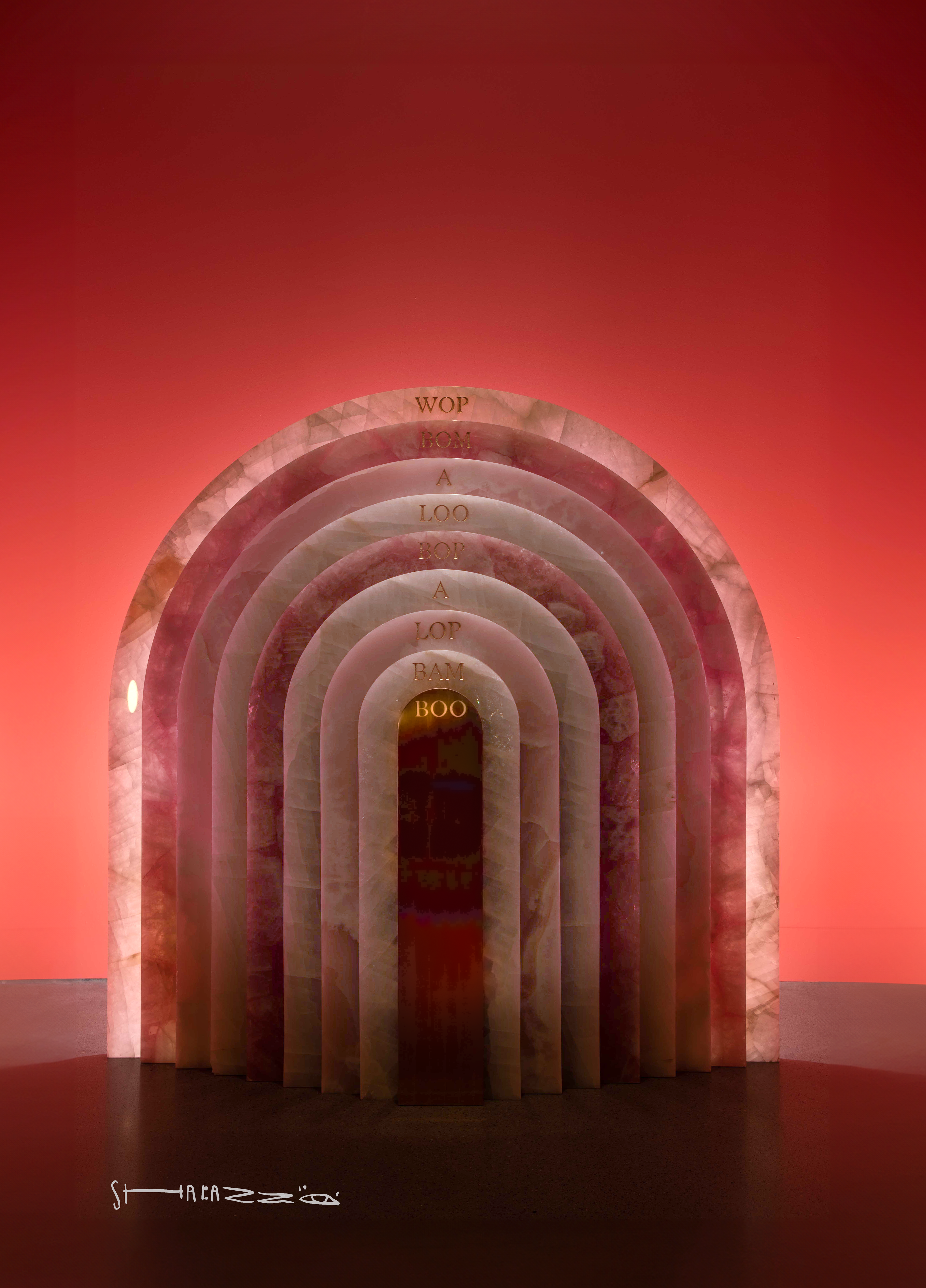
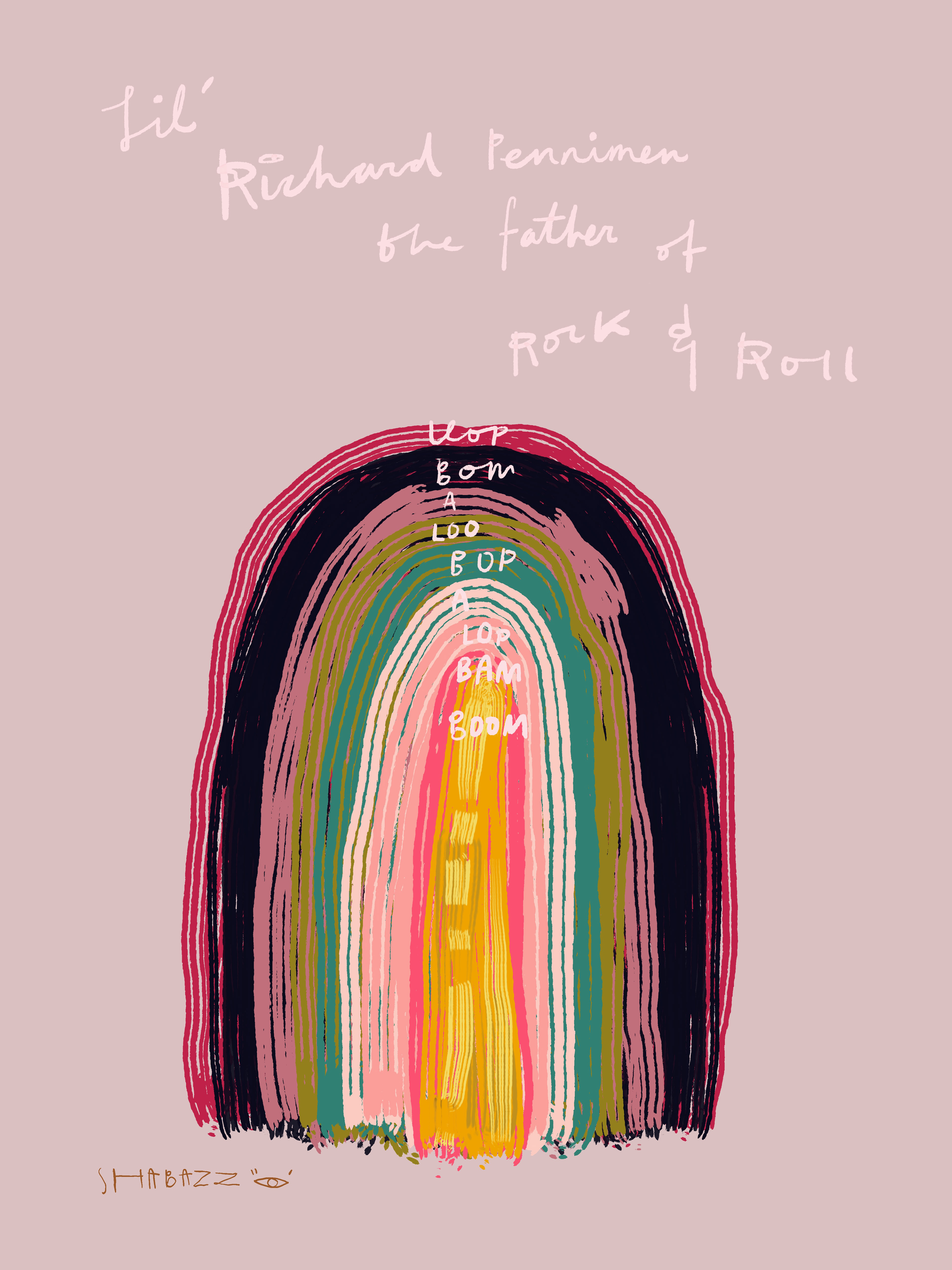
Constructed from pink, white, and gold stones sourced from around the world, the sculpture reflects the global reach of his influence. Across its surface are carved the explosive syllables from his 1955 breakthrough hit “Tutti Frutti” — WOP BOP A LOO BOP A LOP BAM BOOM — a sonic burst that forever altered the rhythm of American music. On Nashville’s Jefferson Street, where clubs once pulsed with this sound, the phrase becomes both inscription and invocation.
Little Richard was born in Macon, Georgia, where Sister Rosetta Tharpe first helped launch his career. He later lived and worked in Nashville, Tennessee, remaining an enduring presence in the city until his passing in 2020.